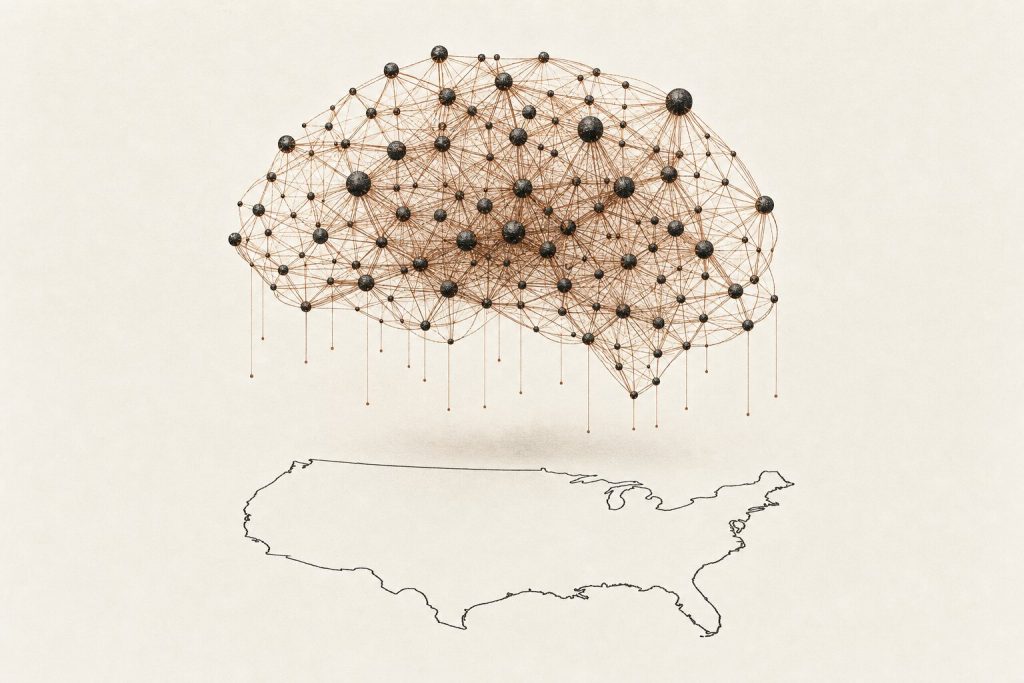
May God lengthen the life of my university professor — Professor Gabrovsky — who used to wish out loud that he would live long enough to see this era: the era of real artificial intelligence.
He would say it often: “I hope we live long enough to see the day of true AI.”
In those years, cloud storage hadn’t matured into what we know today, and AI required computational and storage resources that simply did not exist. It was hard for most people to imagine the kind of progress we now see. And yet, there were scientific theories that predicted AI would one day approach the human level in certain capacities. That is exactly what we are watching unfold today — at accelerating speed.
Now, after this enormous leap, I believe the next few years will bring near-total reliance on AI across every field of life.
From drug development, to what arrives on our breakfast and lunch tables, to food production, to university education, to scientific research, all the way to the smallest details of daily life.
And the difference between someone who uses AI and someone who doesn’t will not be subtle. It will be a difference of “light years” in productivity, scientific output, and economic strength.
The gunpowder analogy
I have long compared AI to gunpowder when it first appeared in history.
The mistake of being late to it could resemble the mistake of the Mamluks, who were late to adopt gunpowder and firearms. The result was their defeat by the Ottomans and the loss of their state.
In my view, lagging behind into the AI age could lead to similar outcomes — at the level of entire states and entire peoples.
From invention to dominance
I expect that America’s monopoly over the major advances in AI will lead in the future to a form of global control that we have not seen before.
Control over AI means control over drug development, over food, over education, over the economy, over production, over scientific research — over almost anything you can imagine.
China remains a serious competitor that should not be underestimated. But I see the United States as still being several stages ahead in this field — especially if the American claims hold up, that some Chinese models depend on imitating or copying American innovations and technologies.
If those claims are true, history may repeat itself in a different form. It would resemble what happened during the Cold War, when the Soviet Union pursued American nuclear technology through espionage and stolen blueprints.
The widening gap
American dominance over AI may give the United States enormous superiority over the rest of the world — not just militarily or economically, but scientifically, educationally, and technologically. That could open a vast civilizational gap between the United States and the rest of the world over the coming decades.
— Omar Abuassaf
Computer engineer and AI specialist
Los Angeles, May 7, 2026